
The short answer: for most people with sensitive skin, professional waxing wins. The longer answer is worth understanding, because the how matters just as much as the what.
What razor burn actually does to your skin
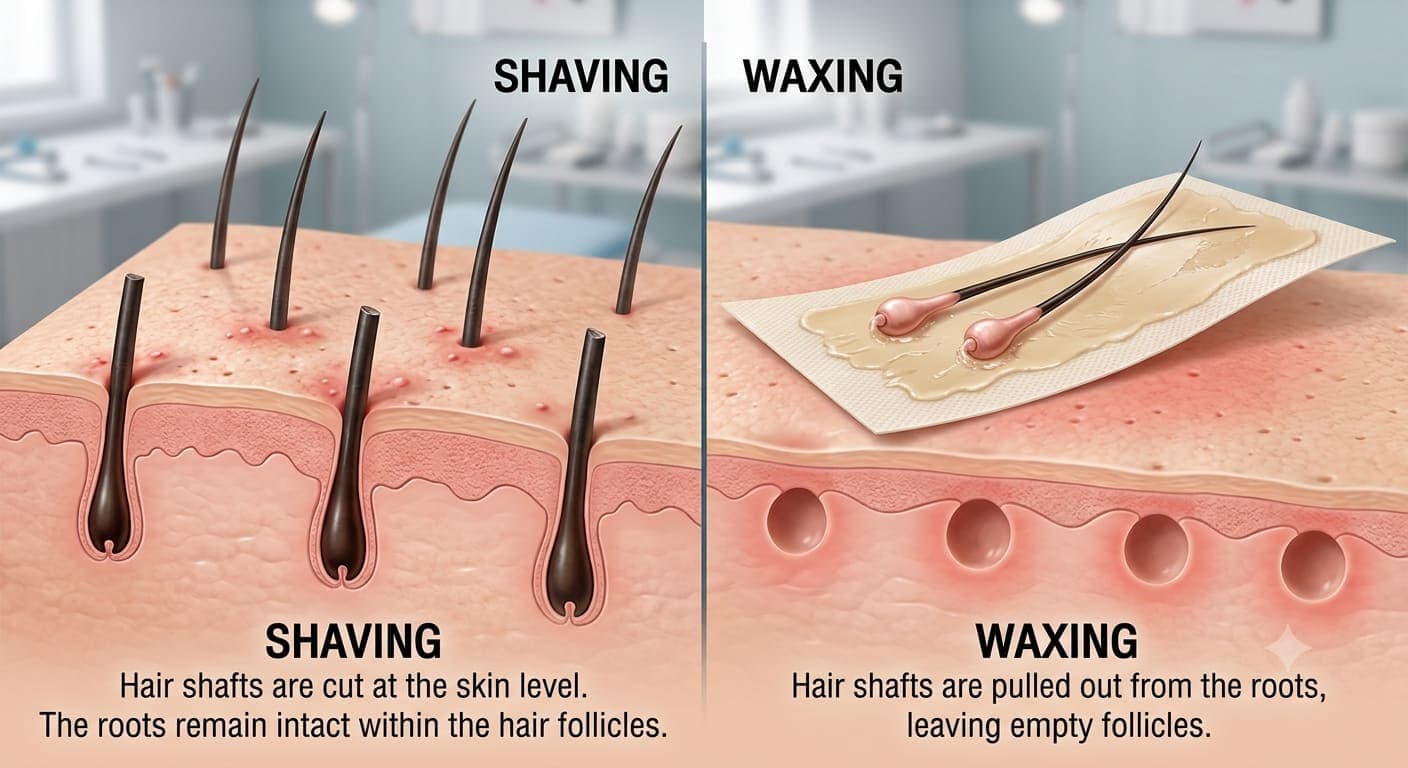
Shaving seems gentle — you are just gliding a blade across the surface. In reality, every pass of a razor creates micro-abrasions in the skin. For sensitive skin, that is enough to trigger inflammation, redness and the familiar burning that sets in within hours.
Razors also cut hair at an angle that leaves a sharp edge. As it grows back, the blunt tip can curl and re-enter the skin, causing ingrown hairs — especially along the bikini line and legs. Frequent shaving repeats this cycle every few days, giving skin almost no time to recover.
There is also moisture. Shaving, especially in the shower, strips natural oils and disrupts the moisture barrier. For anyone prone to dryness, sensitivity or conditions like keratosis pilaris, that disruption compounds over time.
Why waxing is gentler than it sounds
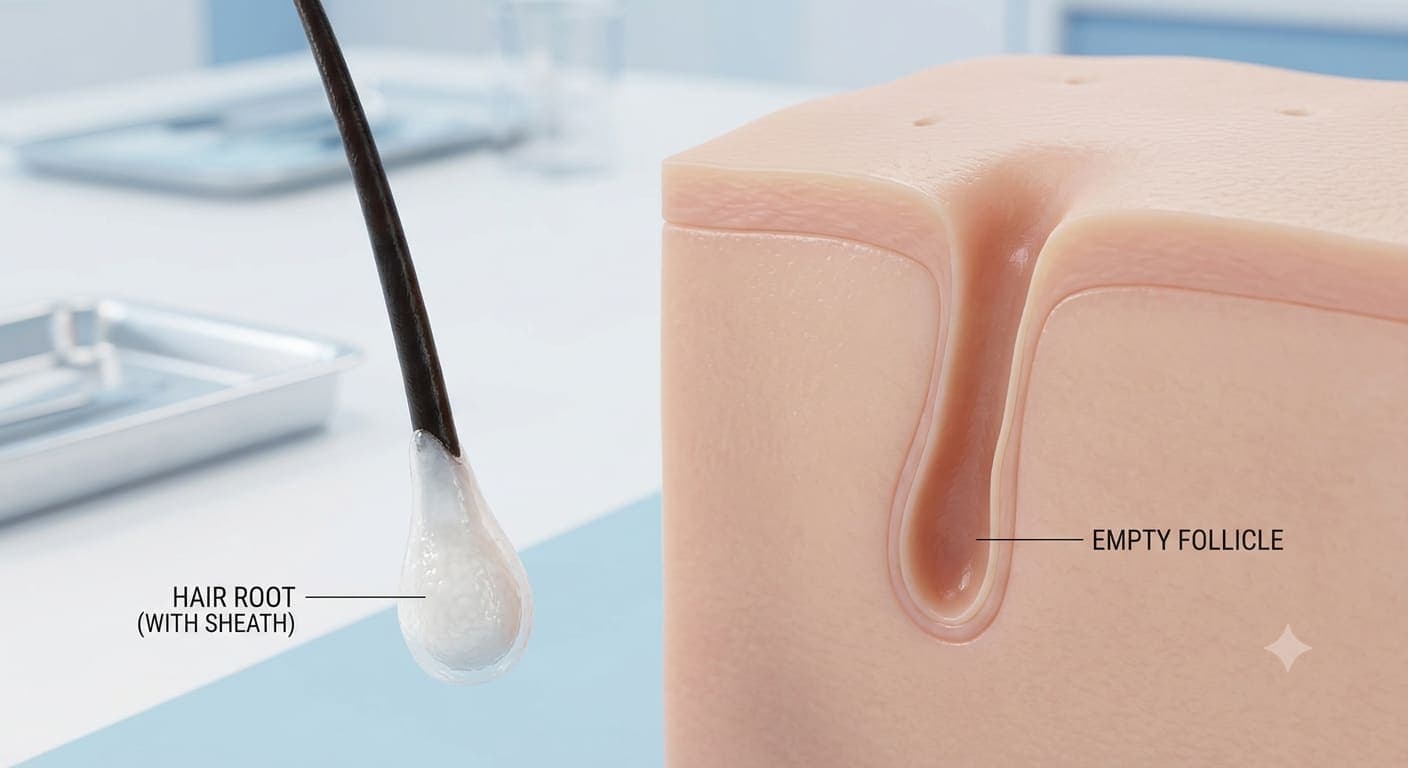
What surprises most first-time guests: the irritation is brief and fades quickly. Unlike shaving, which creates ongoing, cumulative damage, waxing removes hair from the root in one clean motion. The skin has a moment of sensitivity — and then it is done.
Waxing also avoids the sharp regrowth that causes ingrown hairs. Hair that grows back after waxing has a tapered, softer tip that is far less likely to get trapped. With consistent appointments, many guests find hair grows back finer and sparser, so each session is easier than the last.
For sensitive skin, the wax itself makes a big difference. Professional formulas for delicate areas are softer, low-temperature options that adhere to the hair rather than the skin — a far cry from the stiff, high-heat waxes that gave waxing its scary reputation.
When waxing isn't recommended
Waxing is safe for most sensitive skin types, with important exceptions. If you use Retin-A or Tretinoin, your skin is more fragile and waxing is contraindicated — the wax can lift skin along with the hair. Always tell your therapist about topical medications or recent treatments.
Sunburn, open wounds or significant irritation in the area are also reasons to wait. A skilled therapist assesses your skin before starting and always puts your safety ahead of finishing the service.
Aftercare at L'escale Pure
For an extra layer of care after a Brazilian or bikini wax, we offer a Brazilian Mask sheet or organic aloe vera — a post-wax treatment that soothes redness, calms inflammation and deeply hydrates the skin.
Aftercare guidance comes with every service: avoid hot showers, saunas, workouts and tight clothing on the treated area for the first 24 hours, and exfoliate gently between appointments to keep ingrown hairs away.